
The Role of Reefer Containers in Strengthening Cold Chain Logistics in Tanzania
Tanzania’s growing agricultural, fisheries, pharmaceutical, and food processing industries depend on reliable storage and transportation systems to maintain product quality. As demand for fresh and temperature-sensitive products continues to grow, efficient cold chain logistics have become increasingly important for businesses operating across the country.
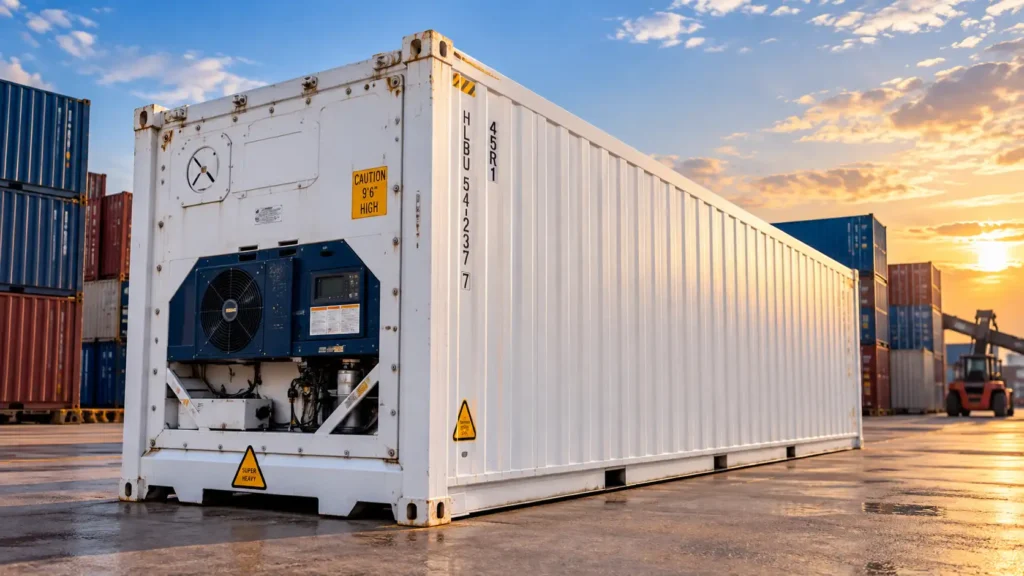
One of the most practical solutions supporting this demand is the reefer container, also known as a refrigerated shipping container. These temperature-controlled units help businesses preserve perishable goods, reduce product losses, and maintain product quality throughout storage and transportation.
From agricultural production areas to distribution centers and export facilities, reefer containers play an important role in strengthening Tanzania’s cold chain infrastructure.
1. Understanding Cold Chain Logistics
Cold chain logistics refers to the storage, handling, and transportation of temperature-sensitive products under controlled conditions throughout the supply chain.
Unlike conventional logistics, cold chain operations require careful temperature management to prevent spoilage, preserve quality, and maintain product safety.
An effective cold chain typically involves:
- Pre-cooling: Bringing harvested or processed products to their required storage temperature.
- Cold Storage: Maintaining products within appropriate temperature ranges before distribution.
- Refrigerated Transportation: Moving products between locations under controlled conditions.
- Temperature Monitoring: Tracking storage conditions to identify potential temperature fluctuations.
- Final Distribution: Delivering products to retailers, processing facilities, or customers while maintaining the required conditions.
A disruption at any stage can compromise product quality, resulting in financial losses and potential safety concerns.
This is where reefer containers provide significant value.
2. What Are Reefer Containers?
Reefer containers are specially designed shipping containers equipped with integrated refrigeration systems that maintain controlled internal temperatures.
Unlike standard dry containers, reefers feature insulated walls, refrigeration equipment, temperature controls, and airflow systems designed to support the storage and transportation of temperature-sensitive goods.
Depending on the equipment specifications, reefer containers can maintain refrigerated or frozen conditions suitable for various products.
Common reefer container sizes include:
20ft Reefer Containers
These units are suitable for businesses requiring relatively compact refrigerated storage, including food distributors, hospitality businesses, and small-scale agricultural operations.
40ft Reefer Containers
Designed for larger storage requirements, 40ft reefer containers provide greater capacity for businesses handling substantial quantities of perishable products.
They are commonly used in agricultural supply chains, seafood distribution, food processing, and commercial cold storage operations.
Important: Reefer containers are designed primarily to maintain specified temperatures. Products that require rapid cooling may need appropriate pre-cooling equipment before being placed inside a reefer.
3. How Reefer Containers Strengthen Cold Chain Logistics in Tanzania
A. Reducing Post-Harvest Losses
Agriculture plays an important role in Tanzania’s economy, supplying fresh produce to domestic and international markets.
However, inadequate storage conditions, transportation delays, and exposure to high temperatures can contribute to post-harvest losses.
Reefer containers help address these challenges by providing controlled storage environments for suitable agricultural products.
For example, businesses handling fruits, vegetables, and other perishable produce can use refrigerated containers to maintain appropriate storage temperatures while preparing products for distribution.
By improving storage conditions, businesses can reduce avoidable spoilage, protect product quality, and improve operational efficiency.
B. Supporting the Fisheries and Seafood Industry
Tanzania’s fisheries sector serves domestic markets and export supply chains, including operations around Lake Victoria, the Indian Ocean, and Zanzibar.
Fish and seafood products are highly temperature-sensitive and require careful handling to maintain freshness and safety.
Reefer containers provide refrigerated or frozen storage options for properly handled seafood products.
Their applications include:
- Temporary storage at fish collection centers.
- Frozen seafood storage before distribution.
- Supporting seafood processing operations.
- Maintaining temperature-controlled inventory at export facilities.
- Providing additional cold storage during periods of increased production.
With appropriate temperature management, reefer containers help fisheries businesses maintain product quality and strengthen their distribution operations.
C. Supporting Pharmaceutical and Healthcare Supply Chains
Certain pharmaceutical products, medical supplies, and laboratory materials require carefully controlled storage temperatures.
Reefer containers may support selected healthcare storage applications where their temperature performance, monitoring capabilities, and operating conditions meet the relevant product requirements.
For temperature-sensitive medicines and vaccines, additional validated equipment, monitoring systems, backup power, and regulatory compliance measures may be necessary.
Businesses should always confirm that the equipment is suitable for the specific pharmaceutical products being stored.
D. Improving Food Processing and Distribution
Food processing companies, supermarkets, hotels, restaurants, and commercial food distributors depend on reliable refrigeration to manage temperature-sensitive inventory.
Reefer containers can provide additional storage capacity for products such as:
- Frozen meat and poultry.
- Fish and seafood.
- Dairy products.
- Selected fruits and vegetables.
- Frozen and processed food products.
For businesses experiencing seasonal demand or expanding operations, reefer containers can offer a flexible alternative to immediately constructing permanent cold storage facilities.
E. Supporting Agricultural Exports
Tanzania exports various agricultural and food products to regional and international markets.
Maintaining product quality throughout the export process is essential, particularly for temperature-sensitive commodities.
Reefer containers support cold chain operations by providing controlled environments during suitable storage and transport stages.
When combined with proper product handling, temperature monitoring, and reliable logistics arrangements, refrigerated containers can help exporters maintain product quality and meet buyer requirements.
4. Key Benefits of Using Reefer Containers for Cold Storage
Flexible Storage Solutions
One of the major advantages of reefer containers is their flexibility.
Unlike permanently constructed cold rooms, containerized refrigerated storage can be relocated when business requirements change, subject to suitable handling and transportation arrangements.
This makes reefers useful for temporary projects, seasonal operations, and businesses expanding into new locations.
Faster Deployment
Reefer containers can often be deployed more quickly than constructing a permanent cold storage facility.
Once the site, electrical supply, and operating requirements are ready, the container can be positioned and prepared for operation.
Temperature Control
Reefer containers feature integrated systems that allow operators to set and monitor temperatures within the equipment’s operating range.
This supports consistent storage conditions when the equipment is functioning correctly and the container is properly loaded and operated.
Scalable Storage Capacity
Businesses can expand their refrigerated storage capacity by adding more reefer containers as demand increases.
This approach allows companies to adjust their storage arrangements without immediately committing to large-scale construction projects.
Potential Cost Efficiency
Reefer containers may provide a cost-effective solution for selected short-term, medium-term, or modular cold storage requirements.
However, businesses should evaluate purchase costs, electricity consumption, maintenance, site preparation, and operating expenses before choosing between reefers and permanent cold rooms.
5. Challenges Affecting Cold Chain Logistics in Tanzania
Despite the benefits of refrigerated storage, several challenges can affect cold chain operations.
Reliable Electricity Supply
Reefer containers require a suitable and consistent electrical supply to operate their refrigeration systems.
Power interruptions can affect internal temperatures, particularly during extended outages.
Businesses should consider appropriate backup power arrangements and monitoring systems where product safety or quality depends on uninterrupted refrigeration.
Transportation and Infrastructure
Road conditions, transportation delays, and limited access to refrigerated handling facilities can affect the movement of perishable products.
Improved coordination between storage facilities, transport providers, and distribution centers is essential for maintaining cold chain continuity.
Equipment Maintenance
Refrigeration systems require regular inspection and maintenance to operate effectively.
Businesses should monitor equipment performance, maintain clean airflow pathways, inspect electrical connections, and address faults promptly.
Operational Knowledge
Effective cold chain management requires more than refrigeration equipment.
Staff must understand product temperature requirements, loading procedures, temperature monitoring, and appropriate handling practices.
Investing in training and operational procedures can significantly improve cold chain performance.
6. Important Factors to Consider Before Buying a Reefer Container
Before investing in a refrigerated container, businesses should evaluate several important factors.
Container Size: Determine whether a 20ft or 40ft reefer container provides sufficient storage capacity for your operations.
Temperature Requirements: Confirm that the refrigeration system can maintain the temperatures required for your specific products.
Container Condition: Inspect the structure, insulation, doors, seals, and refrigeration equipment.
Pre-Trip Inspection (PTI): Request information about recent equipment inspections and functional testing. A successful PTI provides useful evidence of equipment condition at the time of testing, although it does not guarantee future performance.
Power Requirements: Verify the electrical specifications and ensure the installation site has a compatible power supply.
Maintenance and Support: Consider spare parts availability, servicing requirements, and warranty terms.
Site Accessibility: Ensure sufficient space for delivery, placement, ventilation, loading, and maintenance.
Choosing the right reefer container requires careful consideration of both your current storage requirements and future business needs.
7. The Future of Cold Chain Logistics in Tanzania
As Tanzania continues developing its agricultural, fisheries, manufacturing, and logistics sectors, demand for reliable temperature-controlled storage solutions is likely to remain important.
Greater investment in cold chain infrastructure can help businesses improve product handling, reduce avoidable losses, and access new market opportunities.
Reefer containers offer a practical component of this infrastructure by providing flexible refrigerated storage for businesses of different sizes.
When integrated with reliable power systems, suitable transportation arrangements, trained personnel, and effective monitoring, these containers can support more efficient and resilient supply chains.
Conclusion: Strengthening Tanzania’s Cold Chain with Reefer Containers
Reliable cold chain logistics are essential for protecting temperature-sensitive products and supporting business growth.
From agricultural producers and seafood distributors to food processing companies and commercial storage operators, reefer containers provide flexible solutions for managing refrigerated and frozen inventory.
By investing in suitable refrigeration equipment and adopting effective cold chain practices, Tanzanian businesses can improve product quality, reduce avoidable losses, and strengthen their supply chain operations.
Looking for Reliable Reefer Containers in Tanzania?
At Harlos Containers, we provide quality shipping container solutions designed to support businesses across different industries.
Whether you need a 20ft or 40ft reefer container for cold storage, food distribution, agricultural operations, or other commercial applications, our team can help you explore suitable options for your requirements.
Harlos Containers — Go Beyond